
As usual, my busy life keeps me from posting blogs about the economy, but no more excuses!
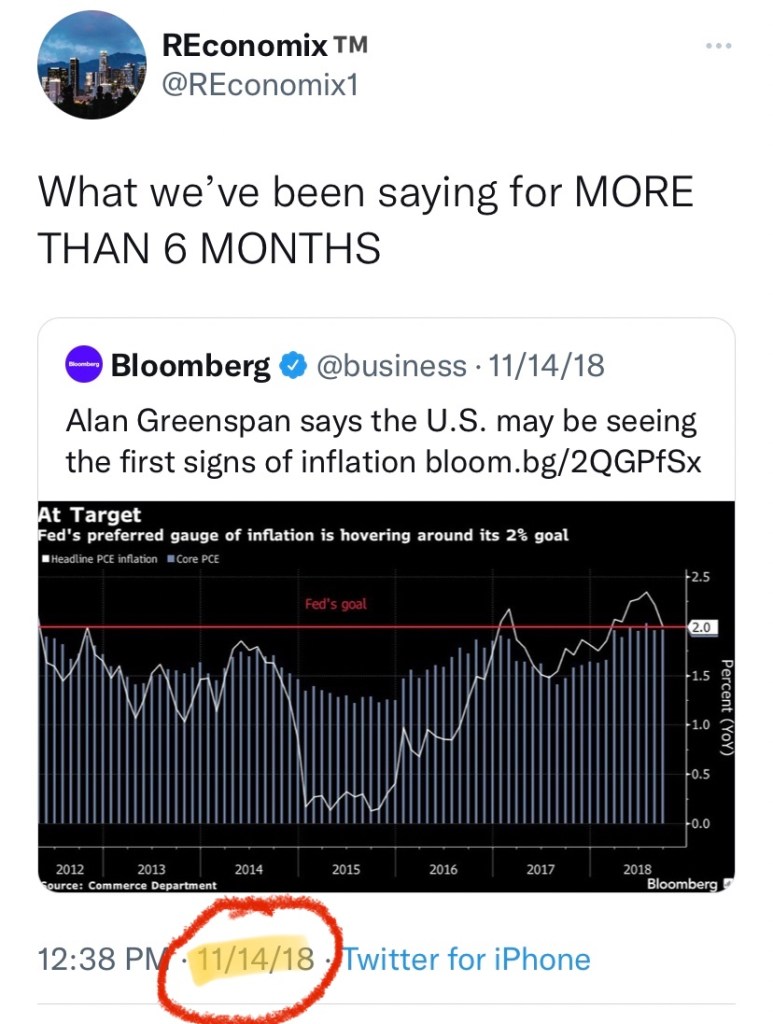
A few of us have been warning people for years about inflation . Not just the occasional tweet of concern, but actually screaming about it via text, and even getting into twitter arguments with people who were absolutely certain that I was wrong.
So ok, now what? Predicting things can be easy sometimes, but what comes next is usually tricky. Not this time. What comes next is entirely predictable.
The first question we must ask ourselves, is whether this inflation is “transitory” as the rudderless Federal Reserve tells us, or whether it’s longer-term, or even, dare I say, structural.
The answer to that is easy for someone like me, because I’ve been watching it build for awhile now. It’s obviously been baked-in to the economy over time- so it is, in fact, long-term.
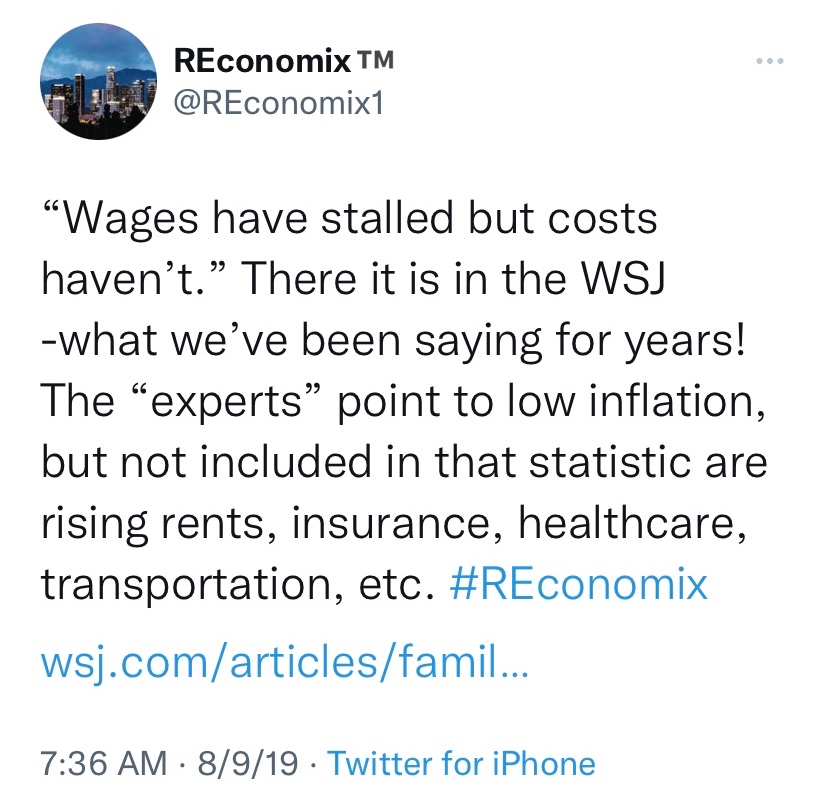
Why isn’t it transitory? That has been ruled out, because many of us who predicted inflation did so well before the pandemic started. The Fed tells us it’s transitory because of a post-pandemic rise in consumerism, and the economy getting back to work. This belies the underlying cause of the inflation itself. The pandemic slowed things to a crawl, and put a temporary hold on inflation. The government, along with the Fed overcompensated (as they often do) and printed trillions of dollars in new cash to break us free from the economic doldrums, and here we are.
Why isn’t it structural? This, because the Fed has lowered interest rates to near zero, the Fed has a lot of medicine to combat inflation. They can also stop printing money. However, it can be bitter medicine, and the delusional Fed has refused to use it, because it would slow down the economy. Slowing down the economy is never a popular idea.
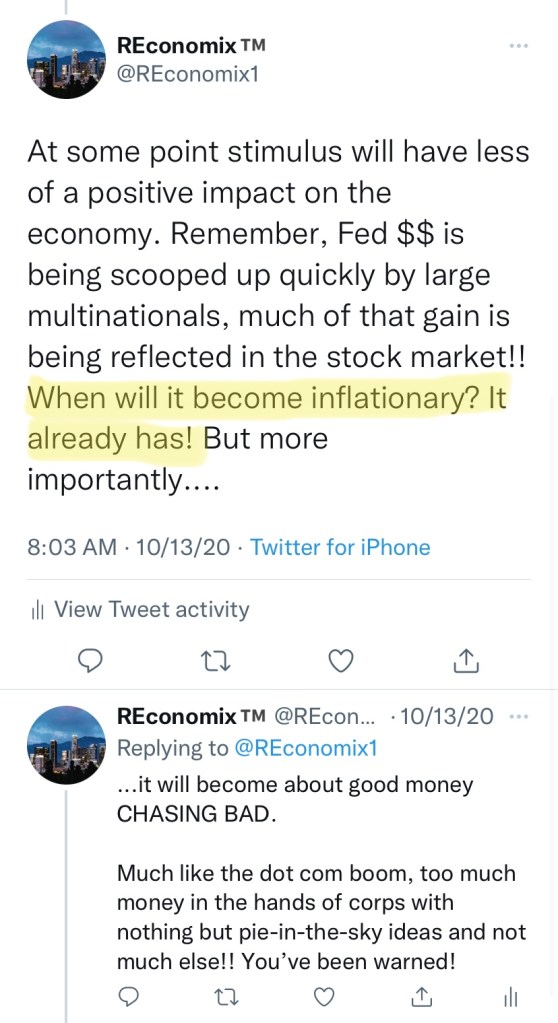
Can inflation become structural? It can, because if the Fed and the US government don’t pull back support quickly, inflation can become runaway train. Inflation breeds inflation, and the worst kind can be programmed psychologically into the consumer. Pulling support from the economy will also have consequences, but it is the bitter medicine we must take.
When a consumer senses something will go up in price if they don’t buy it now, that creates a ripple effect on the economy for necessary goods. This translates into shortages of those goods, and people stop buying unnecessary goods, slowing other parts of the economy and creating a vicious cycle of economic damage and inflation at the same time. This scenario can be down-right frightening.
How can we stop this? Who needs to “step up”? How much time do we have? These topics will be covered in coming blog posts, since this one has gone on a little long.
 REconomix